



 9 November 2026
What Are AI Overviews and How Do They Affect Ad Position?
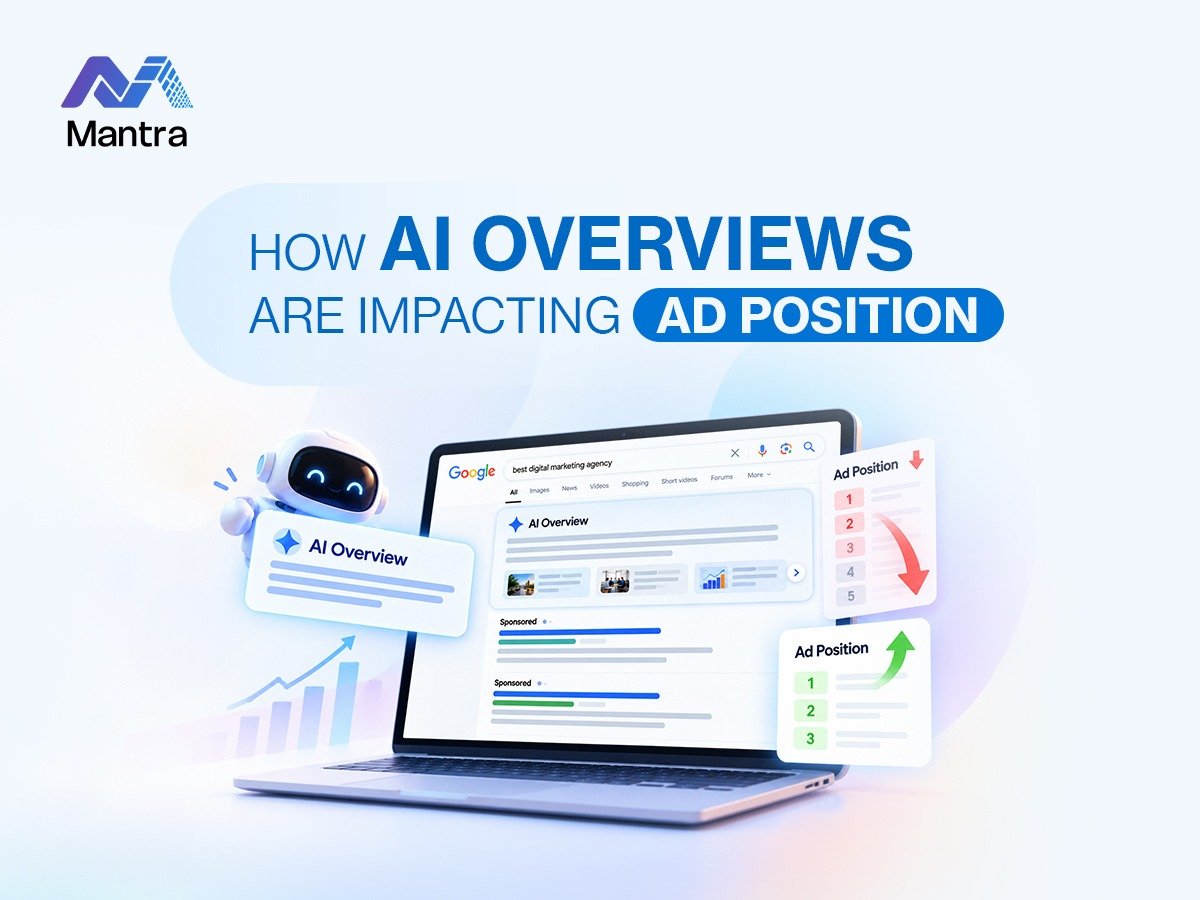
If you’ve searched for anything recently, you’ve seen them. Google AI Overviews are AI-synthesized answer boxes powered by Gemini that sit right at the top of the search results to give users immediate answers.
Nowadays, Google’s Gemini-powered AI Overviews have officially taken over the top of the search page, swallowing up prime real estate and completely disrupting traditional ad positions. While a lucky few high-intent commercial ads still squeeze into the top one or two slots, most paid listings on informational searches are getting shoved way below a massive wall of AI text, forcing users to scroll just to see your headline.
How Much Are AI Overviews Shrinking Ad Clicks?
When Google gives people a complete answer directly on their screen, they rarely click away. This habit means fewer people visit websites through regular search links or paid ads.
Ad Clicks: With vs. Without AI Overviews
How much traffic you lose mostly depends on what your ads are targeting:
- How-To Searches: Ads take a big hit on informational terms. Click rates fall from about 20% down to roughly 6% when an AI box pops up, a steep 68% drop in ad clicks.
- Ready-to-Buy Searches: Clicks stay much safer. They only slide slightly from around 22% to 16%, meaning most serious buyers still click through.
- Top Free Search Spot: Free search links suffer heavily, seeing click rates collapse from around 18% down to just 3%.
- Overall Web Clicks: The chance of a user clicking any link on the page drops nearly in half, from 15% down to 8%.
If you pay for ads on broad research keywords like ‘how to pick a CRM software’, your clicks are likely taking a beating. But if your ads focus on people ready to buy right now, like ‘buy Salesforce license’, your ad position and clicks remain relatively safe.
Which Industries Are Losing the Top Spot to AI Overviews?
Google doesn't treat every search term equally. The impact of AI Overviews varies drastically depending on regulatory risks, search intent, and how much money Google stands to lose if they mess with commercial ads.
- Travel & Retail (80%+ Above)
- Tech & Finance (40–50% Above)
- Healthcare (<15% Above)
Industries Still Winning the Top Spot (Travel, Energy, Financial Services, Retail)
Google loves keeping commercial engine room queries intact. In categories like Retail, Travel, and Financial Services, high-intent queries like ‘cheap flights to Orlando’ or ‘car insurance quotes’ still feature ads right at the very top. Google knows users aren't looking for a paragraph of text, they want to buy or book, fast.
Industries Losing the Top Spot (Healthcare)
If you're in Healthcare, we feel your pain. Over 88% of medical queries trigger an AI Overview block due to Google’s strict health guidelines. Answers to queries like ‘symptoms of a sprained ankle’ are handed directly to the user by the AI, burying healthcare ads far down the page.
The Volatile Middle Ground (Gaming)
Industries like Gaming, Tech, and Software sit right in the middle. Strategic purchase searches display ads normally, but troubleshooting or comparison searches trigger massive AI breakdowns that crush traditional ad positions.
Why Are AI Overviews Reducing Ad Clicks?
It really comes down to three basic human behaviors:
- Zero-Click Convenience: Why click an ad link when the exact steps or answers are highlighted in bold directly in front of you?
- Mobile Viewport Traps: On a phone, an expanded AI Overview takes up 100% of your screen space. Unless a user actively scrolls, your ad doesn't even register an impression in their visual field.
- Synthesized Comparisons: AI Overviews do the heavy lifting by comparing products side-by-side. Users no longer need to click three different advertiser ads to compare features, the summary does it for them.
How Can Advertisers Adapt to AI Overviews Impacting Ad Position?
Panicking and pausing your campaigns isn't the answer. Instead, it’s time to pivot your PPC playbooks. Here is how to regain control:
Track Performance Separately for AI Overview vs. Non-AI Overview Searches
Segment your Google Ads keyword reporting. Identify which broad-match keywords are constantly triggering AI Overviews and trim your bids on those specific low-CTR terms. Save your budget for keywords that trigger clean, standard SERPs.
Focus on Earning a Citation, Not Just an Ad Position
Brands featured as clickable source links inside the AI Overview block see massive traffic spikes. Combine your PPC and SEO efforts: write clear, structured content that Google’s AI loves to reference so you win the citation even if your ad gets pushed down.
Measure Lead Quality, Not Just Clicks
Fewer clicks isn't always a tragedy. The users who skip past the AI Overview and explicitly click your ad are usually highly motivated buyers. You might see lower traffic, but your conversion rates and lead quality could actually go up.
Diversify Beyond Google Ads
Don't put all your ad budget in one basket. Reallocate funds to channels that catch users before they start searching on Google:
- LinkedIn & Meta Ads: Demand generation before intent happens.
- YouTube Search: Visual discovery where users want video, not AI text blocks.
- Microsoft/Bing Ads: Capturing desktop traffic with different AI mechanics.
Invest More in Organic Content for High-Risk Industries
If you operate in healthcare, B2B SaaS, or education, paid ads on informational terms are simply going to get less profitable. Shift budget into creating authoritative, schema-optimized organic content to grab those organic citation spots instead.
What This Means for the Future of Paid Search
The days of buying cheap, easy clicks on top-of-funnel informational keywords are over. Paid search is shifting toward laser-focused, high-intent conversion terms, while top-of-funnel awareness is moving toward Generative Engine Optimization (GEO). The advertisers who win in 2026 aren't the ones crying over lost ad slots, they're the ones adapting their bids, building real domain authority, and capturing users wherever they land.
Frequently Asked Questions
-
How often do AI Overviews push ads below the fold?
On informational queries (especially in Healthcare, SaaS, and Education), AI Overviews push ads below the fold on over 80% of searches. On direct transactional terms, ads stay at the top much more frequently.
-
Does an AI Overview always hurt my ad clicks?
No. Transactional search ads have held relatively steady. Plus, users who bypass the AI Overview to click your ad usually have much higher purchase intent, leading to better conversion rates.
-
Which industries are least affected?
Retail, E-commerce, Travel, and Local Home Services. Google minimizes heavy text summaries on these terms to preserve its main commercial revenue streams.
-
Which industries are most affected?
Healthcare, Education, Financial Advice, and B2B SaaS feel the biggest impact due to the high volume of informational, "how-to" searches.
-
Should I stop running ads because of this?
Definitely not. Just prune broad, informational keywords that yield zero clicks, double down on exact-match commercial terms, and optimize your organic content so your brand shows up inside the AI Overviews as a trusted source.
 +91 82899 59403