




 18 February 2026
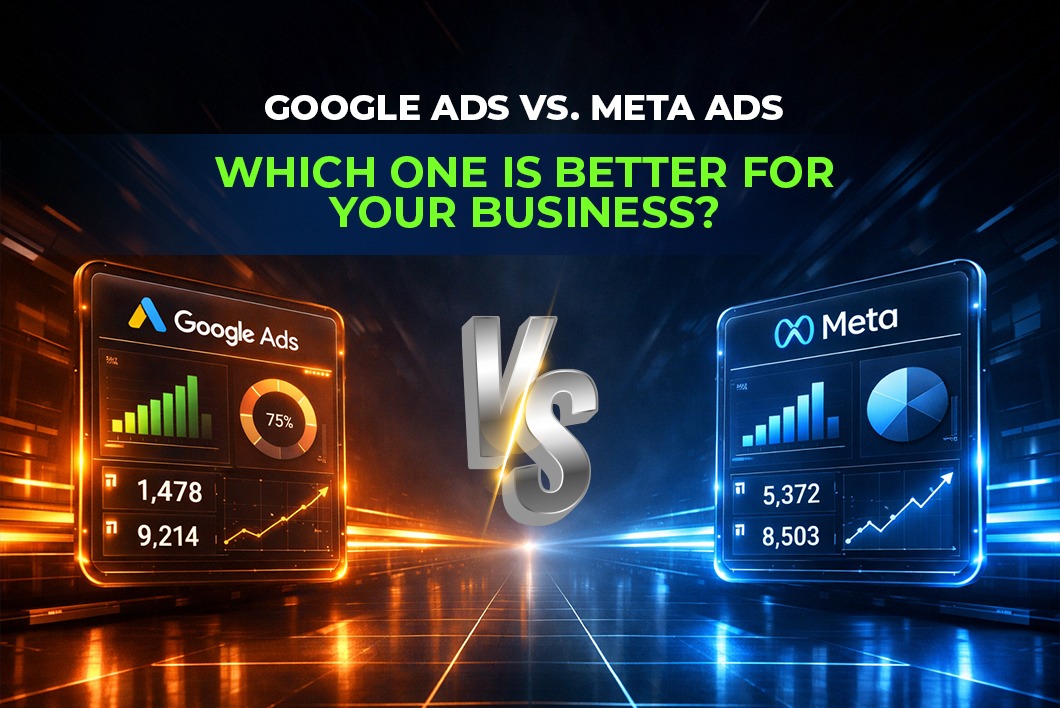
Google Ads vs. Meta Ads: Which Is Better for Your Business?
Introduction
Paid advertising is now a key driver of growth in digital marketing. As organic reach becomes tougher and takes more time, businesses increasingly turn to online ads. These platforms help them gain visibility, leads, and sales at a faster pace. Among these platforms, Google Ads and Meta Ads stand out as the most dominant players.
When choosing between them, many businesses ask: Google Ads or Meta Ads – which is better for you?
The answer isn’t as simple as picking one over the other. This guide explains important differences, costs, targeting methods, ad formats, ROI potential, and best use cases to help you make an informed decision.
Importance of Paid Advertising in Digital Marketing
Paid advertising helps brands connect with the right audience at the right time while providing measurable results. Paid ads deliver:
- Quick visibility
- Precise targeting
- Scalable performance
- High-quality leads
- Increased website traffic
- Higher online sales
- Brand awareness
- Retargeting opportunities
With growing competition, choosing the right platform becomes critical to maximising ROI.
Why Businesses Compare Google Ads and Meta Ads
.png)
The comparison matters because both platforms dominate digital ad spending — but they work in very different ways:
- Google Ads captures existing demand from users actively searching.
- Meta Ads create demand through discovery while users scroll social platforms.
Understanding this key difference is essential before investing your advertising budget.
Key Difference: Intent-Based vs Discovery-Based Advertising
- Google Ads: Focuses on user intent. People know what they want and search for it.
- Meta Ads: Discovery-based advertising. Users don’t search; they discover products while browsing content.
This fundamental difference influences targeting, creatives, costs, and conversion behaviour.
What This Guide Covers
- Targeting methods
- Costs and bidding models
- Ad formats and creatives
- Conversion tracking and ROI
- Funnel suitability
- Best use cases for different business types
What Is Google Ads?
Google Ads is Google’s paid advertising platform. It allows businesses to display ads on Google Search, YouTube, Gmail, the Display Network, and Shopping results.
When users search for keywords related to your business, your ads appear at the top of search results. This makes Google Ads a powerful tool for attracting high-intent traffic.
How Google Ads Works
Google Ads operates on an auction system where advertisers bid on keywords. Ads display based on:
- Keyword relevance
- Bid amount
- Quality Score (CTR, landing page experience, ad relevance)
Key Features of Google Ads
- Keyword-Based Targeting: Ads reach users searching for specific solutions.
- Search Intent Marketing: Ideal for bottom-of-funnel users ready to act.
- Smart Bidding & Automation: AI-driven bidding strategies optimise for conversions, ROAS, or clicks.
Types of Google Ads Campaigns
.jpg)
- Search Ads
- Display Ads
- Shopping Ads
- YouTube Ads
- Performance Max Campaigns
What Are Meta Ads?
Meta Ads allow advertisers to display paid ads across Meta platforms including Facebook, Instagram, Messenger, and Audience Network.
Unlike Google Ads, Meta Ads rely on user behaviour, interests, and demographics rather than search intent.
Key Features of Meta Ads
- Interest & Behaviour-Based Targeting
- Visual-First Advertising
- Advanced Audience Segmentation
Types of Meta Ads Campaigns

- Image Ads
- Video Ads
- Carousel Ads
- Lead Ads
- Stories & Reels Ads
Google Ads vs Meta Ads: Core Differences
Google Ads = Pull Marketing (User searches → Ad appears)
Meta Ads = Push Marketing (Ad appears → User discovers brand)
Audience Targeting Comparison
Google Ads:
- Keyword intent
- In-market audiences
- Custom search behaviour
Meta Ads:
- Demographics
- Interests and behaviours
- Lookalike audiences
Cost Comparison: Google Ads vs Meta Ads
Costs vary by industry, competition, and targeting.
- Google Ads: Typically CPC (Cost Per Click)
- Meta Ads: Often CPM (Cost Per 1,000 Impressions)
Cost-effectiveness depends on campaign goals — not just platform pricing.
Budget Suitability
Startups & SMBs:
- Meta Ads for awareness and testing audiences
- Google Ads for local/service-based lead generation
Enterprise Businesses:
- Combining both platforms enables scalable, full-funnel growth
Ad Formats & Creative Requirements
Google Ads:
- Clear messaging
- Keyword alignment
- High-converting landing pages
Meta Ads:
- Scroll-stopping visuals
- Emotional storytelling
- Strong hooks and CTAs
Conversion Tracking & ROI Measurement
Google Ads:
- Tracks form fills, calls, and purchases
- Strong attribution for high-intent actions
Meta Ads:
- Uses Meta Pixel and event tracking
- Measures engagement-driven conversions
Funnel Stage Suitability
Top-of-Funnel Awareness: Meta Ads
Bottom-of-Funnel Conversions: Google Ads
When Should You Use Google Ads?
- Service-based businesses
- High-intent products
- Local and B2B companies
When Should You Use Meta Ads?
- E-commerce and D2C brands
- Brand awareness campaigns
- Retargeting and community building
Can You Use Google Ads and Meta Ads Together?
Yes — and this is often the most effective strategy.
By combining both platforms, businesses can:
- Build awareness on Meta
- Capture demand on Google
- Create a complete full-funnel advertising system
Ready to Launch High-Performing Ad Campaigns?
Choosing the right platform is just the first step. Strategy, targeting, creatives, tracking, and optimisation determine real success.
Explore our Google Ads Services
Discover our Meta Ads / Facebook Ads Solutions
Let data, strategy, and creativity drive your growth.
FAQs
Which is better: Google Ads or Meta Ads?
Both are effective when used for the right goals and funnel stages.
Are Meta Ads cheaper than Google Ads?
Meta Ads often have lower entry costs, but ROI depends on strategy.
Can small businesses use Google Ads?
Yes, especially for local and service-based businesses.
Which platform gives higher ROI?
Google Ads for intent-based conversions; Meta Ads for long-term growth.
Should I run both together?
Yes, combining both delivers the strongest full-funnel results.
 +91 82899 59403